Distilled from the TUF course transcripts

Vibrational
Facilitator Guide

Everything you need to facilitate from state. Click any section below to dive in.

Method
Reference
Tools
Pre-Session
Get Into State
A guided sequence adapted to how you arrive today. Answer three questions — then follow the steps.
Your north star
State check · Answer to generate your sequence
How are you arriving today?
How much time do you have?
What do you need most right now?
Your sequence
You are ready to enter.
Module 01
State of Being
Who you are is more important than what you do.
01.1
Being vs. Doing
Foundation +

The method begins with a radical distinction: the facilitator does not offer information or technique — they offer a state. People don't remember what you said. They remember the frequency you spoke from. When the facilitator is in their state, they transmit. When they are in their mind, they only inform.

The core vocabulary here is being, availability, and overflow. Overflow is when you are so full of presence that you need nothing from outside — from there, you can give freely.

Questions for self-experience
  • Right now, am I moving from fullness or from need?
  • What does overflow feel like as a physical sensation? Can I find it in the body now?
  • What changes in my presence when I stop trying to do something well and simply am?
01.2
The I Am — Pure Awareness
Central axis +

The I Am is the most fundamental level of what you are — pure awareness, with no content and no opinion. It is the "sun" that penetrates all the bodies. From the I Am, beliefs, emotions, and sensations appear as objects in your field, without taking you over.

Accessing the I Am is not an achievement — it is a recognition. The practice is returning to it again and again: snap out of any momentum of thought and come back to stillness.

"I am that which is aware of the mind. I am behind the mind. The mind appears in front of me in the form of thoughts."
— From the sessions
Questions for self-experience
  • Who am I before any thought? What is the quality of this moment before any thought?
  • Right now, can I notice that there is an awareness that is witnessing what I am thinking?
  • What remains when the thought passes?
01.3
Presence & Availability
Operative state +

Availability is the capacity to be completely open to what is happening — without a personal agenda, without needing things to be a certain way. It is not passivity: it is active presence without interference.

The facilitator checks their availability constantly. Am I busy in my own little bubble — my thoughts, my emotions — or am I available? Where am I and where is my attention? Do I feel my fingertips? Do I feel my belly? Am I the room?

Questions for self-experience
  • What do I need to release to be truly available right now?
  • Where is my attention in this moment — inside, outside, or in both at once?
  • Can I feel the space behind me, to my right, to my left — and still stay present inside?
01.4
Activating Yang Energy
Preparation +

Before facilitating, the body needs to be active. The yang energy — movement energy, fire energy — must be awake. Without it, you arrive carrying residue from the night or the day, and the field feels it as stagnation.

Ways to activate: running, cycling, yoga, Qigong, ice bath, sun exposure. The principle: move until you sweat, then arrive to the space fresh, clear, agile in your field.

Same applies to participants in multi-day retreats: invite them to activate on their own before the session begins. This way they arrive in their own aura and their own energy — not in sleepy or stagnant mode.

Questions for self-experience
  • What does it feel like in my body when yang energy is activated? Can I describe that sensation?
  • What type of movement actually puts me in presence — not just in sweat?
01.5
Purification — Losing Your Powers
Inner journey +

Every leader must go through a phase of losing their external powers — money, charisma, relationships, fame, certainty — in order to discover one true power that is unconditional. This is called purification.

When all the fake uses of power collapse, what remains is the pure use — and then all the other capacities (charisma, empathy, creativity) return, but purified. The confidence that emerges is not dependent on outcomes. It simply is.

Questions for self-experience
  • What "powers" am I still dependent on to feel confident when I facilitate?
  • What would remain of me if all of those disappeared today — and can that facilitate?
Module 02
The Bodies
The architecture of human experience. Knowing which layer you are working with determines how you work.
The I Am · The Sun
Pure awareness. Free from all bodies. Love, presence, consciousness. The point from which everything is illuminated. Has no opinion and no content.
Causal Body
The belief system. Basic assumptions — "I am a man/woman", "I am not enough" — that filter all subsequent experience. The origin of karma and repetitive patterns.
Subtle Body
Emotions, thoughts, energy. Everything that has no physical form but has presence. Thoughts appear as words you can see or hear internally.
Physical Body
Sensations, movement, the senses. The densest object in the field of awareness. Always accessible as an anchor back to presence.
02.1
How the bodies relate
Structure +

Nothing happens in the physical body without a correlate in the subtler bodies. You cannot have a sensation without an emotion or belief connected to it. The flow is always: I Am → causal → subtle → physical.

This means the path of healing can move in either direction: from the physical body (sensation) upward, or from the I Am (stillness) downward, illuminating the denser layers. The sun penetrates through all the bodies.

Questions for self-experience
  • What emotion is present right now? What belief must I be holding to have this emotion?
  • If I ask "what must I believe is true to feel this way?" — what appears?
  • Can I see this belief as an object in my field — not as "me", but as something appearing in me?
02.2
Healing vs. Self-Realization
Key distinction +

Healing happens on the horizontal plane: between people, between parts of oneself, between present and past. It means meeting the imprint, the other person, the emotion — through the body and through relationship.

Self-realization happens on the vertical plane: recognizing that I am what is aware of all of that. From the I Am, beliefs become more visible and lose their power to control.

The method uses both paths. The facilitator's question is: what does this person need right now — contact with the imprint, or recognition of their naturally free nature?

Questions for self-experience
  • What am I working with right now — something that needs to be felt (healing), or something that needs to be seen as not-me (self-realization)?
  • Can I be a witness to what is here without needing to resolve it?
Module 03
Safety & Belonging
Without this foundation, nothing else can happen. It is the first check of the nervous system upon entering any space.
1
Safety — Am I safe here?
The nervous system asks: will I be judged, humiliated, or hurt? If the answer is no, the body opens. If there is doubt, it closes. Safety is built through clarity, honesty, predictable rhythm, and inclusivity.
2
Belonging — Do I belong here?
Are these the right people? Is this the right space for me? Belonging is created through connection, graduality, and the felt sense of "I have a friend here."
3
Unique expression — Do I have space to be me?
Once safety and belonging are established, the being wants to express itself. This is the doorway to real transformation, real vulnerability, and deep work.
03.1
How to create safety as a facilitator
Tool +
Honesty
It is safer to be with someone who says what they feel than with someone who hides it to make people comfortable. Honesty in the field creates real safety.
Inclusivity
All expressions are welcome. Say it explicitly: "find your own way of participating." This releases the cultural pattern of "I must do what the facilitator says."
Clarity
Providing clear information — schedule, what is going to happen, what is permitted — reduces nervous system anxiety before the session even begins.
Graduality
Don't jump straight to deep vulnerability. The ladder is: safe in my body → safe in the field → safe with one person → safe with two → safe in the group.
Humor & Lightness
Humor breaks the expectation that everything must be done "correctly." When the facilitator laughs at themselves, the field relaxes.
Questions for self-experience
  • How safe do I feel in my own body when I facilitate? Can I identify that sensation?
  • Is my window of tolerance as a facilitator wide enough to hold what might appear in the field?
  • What am I still dependent on from the participants — appreciation, agreement, visible results?
03.2
The facilitator's window of tolerance
Internal capacity +

The level of safety you can offer is directly determined by how much you can tolerate yourself. If something in the field moves you — an irritated participant, someone crying, resistance — and it contracts you, the safety of the space drops.

The practice is simple: find your own contractions, sit with them, work with them internally. What is familiar inside creates no fear outside. Your personal stuff gets amplified in the field because all attention is on you and everyone can see through it.

Questions for self-experience
  • What kind of expression from a participant contracts me most — anger, tears, silence, resistance, boredom?
  • When did I last sit with that contraction without trying to resolve it?
03.3
Sun & Moon — Energy Balancing
Group tool +

In any group, some people arrive with overflow — they are the sun, ready to give, radiate, support. Others arrive more receptive, needing nourishment — they are the moon.

Pairing suns with moons creates an immediate energetic win-win: the sun gets to give, the moon gets to receive. Both needs are met without the facilitator having to carry everyone. It creates belonging fast, with minimal guidance.

Questions for self-experience
  • Right now, am I more sun or moon? How do I know in my body?
  • Can I notice when I am giving from overflow vs. giving from depletion?
Module 04
The Unified Field
The space between people has its own intelligence. The facilitator does not create content — they create the conditions for the field to speak.
04.1
What is the Unified Field
Core concept +

The unified field is the collective intelligence that emerges when a group is in presence, connection, and honesty. It doesn't belong to anyone — it is the space itself that speaks, that wants, that heals.

What the field wants (one wants), what it needs (two needs), what is available for it (three available) — this is what will come through. The facilitator does not determine the content: they listen to the field and follow it.

Questions for self-experience
  • Can I sense something larger than "me and them" in a group space? How do I perceive it?
  • When have I felt something emerge that I didn't plan — and it was exactly what the group needed?
04.2
Reading the Field
Skill +

The facilitator is constantly reading the field — perceiving the collective state before deciding their next move. This is not mental analysis: it is somatic and energetic perception of what is present.

Energy level
Is there stagnation, residue, heaviness? Or is there spark, spontaneity, fire? This determines whether activation is needed or whether the group is ready to go inward.
Presence
Are people in their body or in their mind? Signs: head dropping = thinking, eyes moving sideways = processing, physical restlessness = needs movement.
Expansion / Contraction
Is the field expanding or contracting? A question that opens generates resonance and energy. A question coming from personal tension consumes energy from the field.
The sourceful thread
The sourceful thread is the most potent, most alive, most honest thing emerging right now. Following it — not the most interesting idea, but the one with the most real energy — is the central skill.
Questions for self-experience
  • How do I know in my body when something is expanding the field vs. contracting it?
  • Can I sense the most alive thread right now — not the most intellectually interesting, but the one with the most genuine energy?
04.3
The Asset — Group Dynamic Roles
Group dynamics +

In every group there are unwritten roles that rotate. The asset is the person who, through their sensitivity, channels what the collective field needs to process. It is not necessarily their personal process — it is the group's process expressing through them.

The asset may feel off, heavy, energetically different — without knowing exactly why. They may start moving or expressing things that seem unrelated to the topic. The facilitator's job is not to see this as a problem but as a gift: something needs space here and this person is bringing it. Give it room, name it with care, integrate it into the field.

Questions for self-experience
  • Do I recognize in myself the tendency to be an asset — to feel things from the field before others do?
  • As a facilitator, can I distinguish when something is coming from the field vs. when it is purely personal?
Module 05
Attunement
The most fundamental skill of the facilitator. Without it, what you offer does not land.
05.1
What Attunement Is
Central skill +

Attunement is the state of being simultaneously tuned in and out — fully present inside your own body while completely open to what is happening in the field around you. It is not listening with the ears; it is being the room while remaining centered in yourself.

"Attuned — not busy in my small world and not busy outside. Connected inside and outside. Center."
— From the sessions

The check is simple: do I feel my fingertips? Do I feel my belly? Am I the room? If yes to all — attunement is present.

Questions for self-experience
  • Can I feel my body from the inside right now — sensations, temperature, weight — while reading these words?
  • Can I expand my awareness to the edges of the room I am in, and still feel my body?
  • What changes in me when I manage both at the same time?
05.2
Receiving the Other's Transmission
Deep listening +

Listening is not processing information — it is allowing the other's experience to enter you. The question the facilitator holds beneath every interaction is: why are you saying this? Not the what, but the energetic why.

The skill of copying the feeling — not the words, not the movement, but the inner source of what someone is expressing — is training in real empathy. When you receive well, the other person feels seen without you having said a word. Leadership is listening.

Questions for self-experience
  • When someone speaks to me, which part of me is most active — the one that analyzes or the one that feels?
  • Can I try not listening to the words and only receiving the energy of who is speaking? What do I notice?
05.3
Loving Presence — The Base Frequency
Base frequency +

Loving presence is not a performance — it is the result of being centered plus assuming the best of others. It has two components: presence (empty of ego, free from tension) and love (the intention of inclusion, connection, welcoming of whatever appears).

The check-in question: what is the best case scenario for this field right now? Keeping that vision alive — not as a thought but as a felt sensation — is what transmits it to the room.

Questions for self-experience
  • What does loving presence feel like as a physical sensation in my body? Can I invoke it right now?
  • What changes in my eyes, my posture, my breathing when I feel it?
  • What is the best case scenario for my life / my next session — right now?
Module 06
Limiting Beliefs
The deepest territory of the work. Beliefs are not problems — they are the filters through which all reality is experienced.
06.1
How a belief forms
Understanding +

Beliefs form in childhood as belonging mechanisms: "what must I do or be in order to belong to this group?" They are imprinted in the causal body and filter all subsequent experience. This is why they are so persistent — they are linked to survival.

The structure is always: physical sensation → emotion → belief. If I follow the thread backwards, I arrive at the assumption that is generating everything. Any emotion I have, I can find the belief underneath. Any sensation, I can find the emotion, then the belief.

Questions for self-experience
  • What must I believe is true to feel the way I am feeling right now?
  • In what situation from my childhood was this belief the correct response for survival or belonging?
06.2
The Coping Mechanism
Recognition +

Every limiting belief generates a coping mechanism — the behavior you use to prove the belief false or compensate for it. If the belief is "I am not enough," the coping might be: being the most prepared, the funniest, the most spiritual, the one who knows the most.

The problem: acting from the coping never resolves the belief. It only suppresses it temporarily. The belief returns when external validation disappears. Collect data on your coping: when do I prove myself, judge others, become superior or inferior, rush to speak, over-prepare?

Questions for self-experience
  • What is my most repetitive limiting belief about myself when facilitating?
  • What is my primary coping mechanism? When do I over-prepare, over-explain, or seek validation?
  • Can I notice the coping in the body — as tension, as acceleration, as urgency to act?
06.3
Working with beliefs — the approaches
Tools +
Admit Defeat
Instead of proving the belief false (coping), admit it: "yes, from that point of view, it is true." This immediately releases tension. The belief loses power not when you deny it, but when you accept it as a limited perspective from a specific moment in time.
There is no Lack
Absence does not exist — only what is exists. "I don't have confidence" is a thought, not a reality. Where is the no-confidence? You cannot point to it. There is a sensation and an interpretation — nothing more.
Release Momentum
Any thought sustained over time creates momentum — a story that feels real. The work is to pause that momentum: return to the I Am, check what is actually true, and re-engage from conscious choice rather than from habitual reaction.
Data Collection
Don't believe thoughts — collect them. "Oh, interesting, that's what my mind says right now." Be a student of your own patterns, not a believer in them. Write them down, notice when they arise, see the pattern without being consumed by it.
Questions for self-experience
  • Can I fully admit the belief I am holding right now — without trying to refute it — and just observe what happens in the body?
  • What momentum of thought am I riding right now that I could simply pause?
Module 07
Facilitation in Action
The models and concrete decisions you make while facilitating — drawn directly from the method.
07.1
Workshop Structure
Structure +
1
Vibrational Preparation
Meditation, breathing, movement — whatever brings the group into presence before any content begins. Without this, you speak to the mind, not to the being.
2
Introduction / Framing
What we are going to do, why, and how to navigate the experience. Includes safety and inclusivity language. Short but clear. State your name, create credibility without making it about you.
3
The Experience
The heart of the workshop. Designed with graduality. Follow the sourceful thread — what is most alive, most honest, most potent in the field at this moment. Props, timing, and format are secondary to the energetic read.
4
Integration
Time for what was experienced to settle. Can be: silence, writing, sharing in pairs (1 minute each), movement. Without integration, the experience does not take root. Integration also gives the facilitator a reset.
Questions for self-experience
  • What state do I want participants to have when they leave? Can I feel that state in myself right now?
  • Which part of this structure do I tend to skip — and what does that say about me?
07.2
Real-time decisions
Navigation +
When to open
When there is expansive energy, real vulnerability, a live thread emerging. The signal: the field is opening, there is genuine movement, the person is available for learning — not insisting.
When to postpone
When there is insistence, excessive personal need, or when the question consumes more energy than it contributes. You can say: "let's hold that for the right moment." Stay on course with what is most potent now.
When to give space
When a process is emerging — don't intervene. Provide what is needed in a neutral way and let the process complete by itself. Your job is availability and presence, not intervention. Things are ready when they are ready.
When to move
When the field stagnates, when energy drops, when a person has completed but there is no more movement. Changing the physical position, the activity, or the focus resets the field. Trust the impulse to shift.
Questions for self-experience
  • When do I act from urgency or from the need to do something — vs. when do I act from a clear read of the field?
  • Can I practice waiting one more moment before acting — and notice what emerges?
07.3
Alpha vs. Omega — Vibrational Leadership
Leadership model +

Alpha leadership leads from the front — active, directing, making things happen. It is useful but energetically costly and creates dependency in the group.

Omega leadership is already at the destination. It does not need to go — it is already there. From that completeness, the field organizes itself around it naturally. Like a tuning fork: you only need to be the frequency and others synchronize.

"People don't trust where you go or what you do. People trust and care where you come from."
— From the sessions
Questions for self-experience
  • When I facilitate, am I going toward something — or am I already being what I want the space to be?
  • What needs to be resolved in me to be that tuning fork?
07.4
True Confidence
Mindset +

True confidence does not come from knowing what will happen — it comes from knowing you can be with whatever happens. It is independent of whether you have clients, money, a partner, or visible success.

Humility is the gateway to true confidence. When I allow myself not to know, the field can speak through me. When I need to perform knowing, I block the very intelligence I want to offer. True confidence lies in humility.

Questions for self-experience
  • Are my external powers — knowledge, structure, charisma — a substitute for confidence or a vehicle for it?
  • Can I be comfortable in the unknown right now? What do I have to hold onto in the unknown?
07.5
Generosity — Who is it for?
Orientation +

The facilitator asks this of almost everything they do: who is this for? Is this for me — for recognition, validation, to prove something — or is it genuinely for the field?

Real generosity is overflow: I am so full that I can give without needing anything back. This is different from giving from lack, where I give in order to receive validation, love, or approval. The more I give from overflow, the more purposeful and happy I am — because I am less consuming and more truly of service.

Questions for self-experience
  • Right now, in this moment, what am I doing or thinking for me — and what for the field?
  • Can I give something to myself first — and feel the difference in how I then relate to others?
Module 08
Facilitator Checklist
Concrete questions to use before, during, and after each session. These are not theoretical points — they are somatic checks.
08.1
Personal preparation
+
  • Have I activated my yang energy? (movement, sweat, clearing the nightly residue)
  • Have I closed external threads? (messages, worries, lists) — not to ignore them, but so they don't consume presence
  • Have I had quality me-time — silence, meditation, connection with my own field?
  • Do I know what my intention for this session is? Can I feel it in my body, not just think it?
  • Have I used the rituals that put me in state? (specific music, movement, posture, breath)
  • Have I connected with my calling — why I am doing this, who it is for — as a felt sensation?
08.2
Upon entering the space
+
  • Am I transmitting from my being or from my plan?
  • What is my body reading in the field right now? (energy, presence, stagnation)
  • Does the group need yang activation or can they already go inward?
  • Have I created the first level of safety? (name, purpose, clarity on what will happen)
  • Have I named inclusivity? ("find your own way to participate")
  • What is the best case scenario for this field — and can I hold it as a felt sensation?
08.3
Continuous attunement check
+
  • Am I attuned? — Am I busy in my own world or am I available?
  • Do I feel my fingertips? Do I feel my belly? Am I the room?
  • Am I following the sourceful thread or am I following my plan?
  • Is my next move coming from tension (I need to do something) or from a clear read of the field?
  • Is someone acting as an asset who needs space and acknowledgment?
  • Am I assuming the best of every person in this space?
  • Is this for them — or for me?
08.4
Personal integrity check
+
  • Am I saying something I genuinely feel or know — or am I filling silence?
  • Don't say anything you're not. Don't say anything you don't feel or know for sure.
  • Am I the tuning fork — or am I trying to be the show?
  • Can I feel when my coping mechanism activates? (over-preparation, over-explanation, need for approval)
  • Can I return to the I Am right now — and from there, decide if there is anything to do?
08.5
Personal integration
+
  • What did this field show me about my own limiting beliefs?
  • Were there moments I got lost — went to the plan, the mind, the need? When and why?
  • How generous was I — was I overflowing or consuming?
  • Was the integration I offered the group enough? Too short?
  • Is there something from this session I want to carry as data — a belief that surfaced, a pattern I noticed in myself?
  • What is my 21-day commitment — one small thing I do consistently to stay in state?

"You are the leader of the space. You are the creator. What are you emitting right now? What are you producing internally that you're transmitting outwardly?"
— From the sessions
Module 09
Mind Map
All key concepts in one view — how the method holds together as a whole.
I Am Pure Awareness The Bodies I Am · Causal · Subtle · Physical Healing vs. Self-realization State of Being Being · Availability · Overflow Yang energy · Purification Attunement Inside + Outside simultaneously Loving presence · Deep listening Safety & Belonging Safety · Belonging · Expression Graduality · Sun & Moon The Unified Field Sourceful thread · Field reading Asset · Group dynamics Limiting Beliefs Causal body · Coping mechanism Admit defeat · No lack · Momentum Facilitation Prep · Frame · Experience · Integrate Alpha vs. Omega · True confidence Generosity & Purpose Overflow · Who is it for? Servant of God · Calling Being / Awareness Container / Field Work / Facilitation
How to use this map
  • The I Am is the center — everything else either prepares access to it or expresses it outward.
  • Gold nodes (top) are the inner world of the facilitator. Teal nodes (sides) are the container. Rust nodes (bottom) are the work itself.
  • Every session moves: prepare state → build container → follow the field → work with what emerges → integrate.
Module 10
Glossary of Key Terms
The author's exact vocabulary — preserved as the language of the method.
I Am
Pure awareness, prior to any thought, belief, or sensation. The fundamental ground of being — free from all bodies, free from opinion. The "sun" that penetrates all layers.
Availability
The state of being completely open to what is happening, without a personal agenda or need for things to be a certain way. Active presence without interference. The prerequisite for transmission.
Overflow
The felt experience of being so full of presence that you need nothing from outside. The only state from which real generosity is possible. Giving from overflow is giving without consuming.
Attunement
Being tuned simultaneously inward (feeling your own body, fingertips, belly) and outward (being the room, holding the whole field). Not one or the other — both at once. The central skill of the facilitator.
Unified Field
The collective intelligence that emerges when a group is in presence, connection, and honesty. It has its own wants, needs, and timing. The facilitator listens to it and follows it rather than imposing content.
Sourceful Thread
The most alive, most honest, most energetically potent thing emerging in the field at any given moment. Following it is the art of facilitation — not the most interesting idea, but the one with the most real movement.
Yang Energy
Movement energy, fire energy, active energy. Must be awakened in the facilitator (and ideally participants) before a session to clear nightly residue and stagnation. Activated through physical movement, sweating, cold exposure.
Loving Presence
The base frequency of the facilitator: presence (empty of ego) + love (intention of inclusion and welcoming of all that appears). Not a performance. The result of being centered plus assuming the best of others.
Causal Body
The layer of the belief system — the basic assumptions that filter all subsequent experience. Origin of karma and repetitive patterns. Located between the I Am and the subtle body. The deepest layer of personal conditioning.
Coping Mechanism
The behavior generated by a limiting belief to compensate for it or prove it false. Over-preparation, seeking validation, performing expertise. Acting from the coping never resolves the belief — it only suppresses it temporarily.
Admit Defeat
The first tool for working with limiting beliefs. Instead of fighting or proving the belief false (coping), fully admit it from the point of view from which it is true. This immediately releases the tension that drives the coping.
Momentum
A thought or story sustained over time that begins to feel real and self-perpetuating. The practice is to pause momentum — return to the I Am — and re-engage from conscious choice rather than habitual reaction.
Asset
A person in the group who, through sensitivity, channels what the collective field needs to process. Not necessarily their own personal material — the group's unconscious expressing through them. To be welcomed, named, and given space.
Purification
The process of losing external powers — money, certainty, charisma, fame — in order to discover one true power that is unconditional. A necessary phase for any leader who wants to move from performing confidence to embodying it.
Omega Leadership
Leadership from completion rather than direction. The omega leader is already at the destination — they don't need to lead because they already are. Like a tuning fork: simply being the frequency causes others to synchronize.
True Confidence
Confidence that does not depend on outcomes — not on clients, money, approval, or visible success. The result of purification: what remains when all external powers are gone. Found through humility, not achievement.
Window of Tolerance
The range of experience the facilitator can hold without being contracted or destabilized. Determines the ceiling of safety in the space. Expanded through personal inner work — meeting your own contractions before they appear in the field.
Graduality
The principle of building safety, depth, and intimacy in layers — never jumping ahead. Safe in the body → safe in the field → safe with one person → safe with the group. Violating graduality creates shock and closes the field.
Sun & Moon
A framework for reading energetic states in a group. The sun is overflowing — ready to give, radiate, support. The moon is receptive — needing nourishment. Pairing them creates a natural energetic circuit without the facilitator having to carry everyone.
Snap Out
The immediate, deliberate break from any thought momentum, daydream, or mental drift. A core practice of presence: catching the moment you leave and returning — without judgment, but without delay. Train it as a reflex.
Module 11
Get Into State
A toolkit of methods and prompts to return to the I Am — before a session, mid-session, or any moment you notice you've left.
"There is always more relaxation. There is always some tension to find and to release."
— From the sessions
T·01
Body Scan & Release
Somatic · 3–5 min
T·02
Belly Breathing
Nervous system · 2 min
T·03
Snap Out
Presence · Instant
T·04
Expand Awareness
Attunement · 2–3 min
T·05
Connect with Intention
Calling · 3 min
T·06
Vibrational Anchor
Memory · 3 min
T·07
The Guest House
Welcoming · 3–5 min
T·08
Pause the Momentum
Beliefs · Anytime
T·09
Yang Activation
Energy · Pre-session
T·10
Best Case Scenario
Vision · 1 min
Module 12
Scripts
Step-by-step protocols for guiding a participant to feel and discover their own truth. Not rigid scripts — living structures you adapt to the field.
Script 01
Guiding a Participant to Their Sensation
Foundation +

Use when someone is speaking from the mind — explaining, analyzing, solving. The goal is to bring them back into the body and into what is actually present.

Step 1 · Slow them down
Interrupt the mental stream — gently but clearly
"Wait. Just hold that for a moment. Don't go anywhere. Stay right here."
The interruption itself is the first act of facilitation. Pausing the story is pausing the belief.
Step 2 · Direct to the body
Bring attention to physical sensation
"As you say that — what do you notice in your body right now? Don't think about it. Just notice. Where do you feel it?"
Wait. Give genuine silence. Do not fill it. The sensation is already there — they just need space to find it.
Step 3 · Expand the sensation
Don't analyze — give it space
"Good. And can you give that sensation a little more space? Not to change it — just to let it be exactly as it is."
"Breathe into it. Relax your jaw. Relax your belly."
Tension around a sensation means resistance. Relaxing the jaw and belly is the fastest physical release available.
Step 4 · Name without labeling
Reflect what you perceive — as sensation, not story
"I notice something in your voice. Something is there. What is it for you?"
Don't name it for them. Don't say "you seem sad" or "that sounds like fear." Let them name their own experience.
Step 5 · Amplify if it opens
When something real emerges, give it more room
"Yes. Say more about that."
"Stay with that. Don't rush to explain it. Just feel it."
"Say more" — two words. They amplify what is alive without directing where it goes. Use them whenever real vulnerability appears.
Step 6 · Complete — don't resolve
Let the process land — not be finished
"Take a breath. Notice how you feel right now compared to a moment ago."
Completion is not resolution. The goal is not to fix — it is to let the person be with what is real, more fully than before.
Script 02
Uncovering the Limiting Belief
Beliefs +

Use when a participant is in a recurring pattern — tension, avoidance, frustration, coping — and you want to help them trace it to its root belief.

Step 1 · Find the feeling
Start with the body, not the story
"Where do you feel this in your body?"
"Let's stay in the sensation for a moment before we go to the story."
Step 2 · Find the belief
The key question — use it precisely
"What must you believe is true in order to feel this way right now?"
Wait. This question has power — don't soften it or rephrase it too quickly. Let them sit with it. The answer comes from the body, not the mind.
Step 3 · Trace it back
Find the origin without making it a big deal
"When was the first time you felt this? If a moment comes — don't force it — but if something appears, stay with it."
Don't insist. If a memory comes, acknowledge it. If not, stay present with the belief as it is now.
Step 4 · Question the belief — don't fight it
Gently introduce another perspective
"From the point of view of the child who needed that belief — it makes complete sense. Is it still true now?"
"What would be true if this belief wasn't there?"
Step 5 · Admit defeat
Don't fight the belief — agree with it and release the tension
"What if you didn't have to prove it wrong? What if, from that five-year-old's point of view, it was simply true — and that's okay. You're not five anymore."
The moment they stop fighting the belief, the energy changes. Resistance drops. That is the door.
Step 6 · Return to the I Am
Let the light of awareness hold what just appeared
"Take a breath. Notice: you are aware of this belief. You are not the belief. It appears in you. Who is aware of it?"
This is the pivot from healing into self-realization — only use it when the person is settled enough to receive it.
Script 03
Opening a Space — Vibrational Preparation
Group · Opening +

The opening sequence to bring a group into presence, release residue, and create a coherent field before any content begins. Adaptable from 5 to 25 minutes.

Step 1 · Land and arrive
Invite the body to arrive before the mind
"Take a few breaths together. Inhale through the nose, exhale through the mouth. And just relax — allow yourself to arrive into your body, into your breath, exactly as you are sitting."
Step 2 · Find the most evident sensation
Connect with what is already present
"Find your most evident sensation right now — the one that makes you feel connected. Connect with it, expand into it — without labeling, without judgment. This is where you are. That is perfect as it is."
Step 3 · Body scan — release tension
Scan downward, releasing and allowing energy to sink
"Bring awareness to the top of the head — relax. The forehead — relax. The jaw — open it slightly, relax the tongue. The throat, the shoulders, releasing maybe the sense of responsibility or control. The back, the chest, the heart — take a few breaths in the heart. The belly — make it like a balloon. The hands, the pelvis, the thighs, the feet."
Slow down. Each area gets real time. You are not reading a list — you are scanning with them.
Step 4 · Expand awareness to the room
From body to field
"Expand your awareness to your whole body — notice your whole body full of light. Then expand to your energy body — there is a light bubble around you. And now let that light extend into the whole room. Become the room. This light is welcoming, accepting, ever present."
Step 5 · Set intention
Let the best case scenario emerge
"In this presence, in this availability — what would be the best case scenario for you today? Not a plan. A felt sense. A glimpse. Let it appear."
Close with a Namaste bow or a shared breath. The field is now open.
Script 04
Welcoming a Part — The Guest House
Inner work · Integration +

Use when a participant — or you yourself — encounters a difficult emotion, fear, or contraction that needs to be met rather than resolved. Drawn from Rumi's Guest House metaphor, used directly in the sessions.

Step 1 · Choose a guest
Name what is present without fighting it
"Choose a part of you that needs some love right now — a feeling, a thought, a sensation, a fear. Whatever is most present. Place it in your heart."
"Tell this part: 'I have space for you in my heart right now. Come and be with me.'"
Step 2 · Be a good host
Welcome without solving
"Like Rumi says — every guest is welcome in my guest house. Anger, you're welcome. Confusion, welcome. Sadness, welcome. Fear, welcome. Be a good host. Offer them some tea."
The metaphor matters. It creates distance between the person and the emotion — enough distance to be curious instead of overwhelmed.
Step 3 · Move the guest through the floors
Feel the difference above and below the heart
"Take this guest to the basement — just below the heart. Breathe there. Notice how it is."
"Now bring them to the top floor — just above the heart. Breathe there. Is there more space here? More compassion, forgiveness, gratitude?"
"Let them naturally settle into the center of the heart. Wrap them in the light of the heart."
Step 4 · Return to open awareness
The guest is held — now release the focus
"Let go of the guest for a moment. Return to open, spacious awareness. Nothing to focus on. Just rest. Rest in natural great peace."
After this practice, don't rush. Silence is part of the integration. Let it land before asking for a share.
Script 05
Integration Close — Sharing in Pairs
Group · Closing +

The integration protocol used to close any experience — solo meditation, group process, or somatic work. One minute each. The structure is always the same.
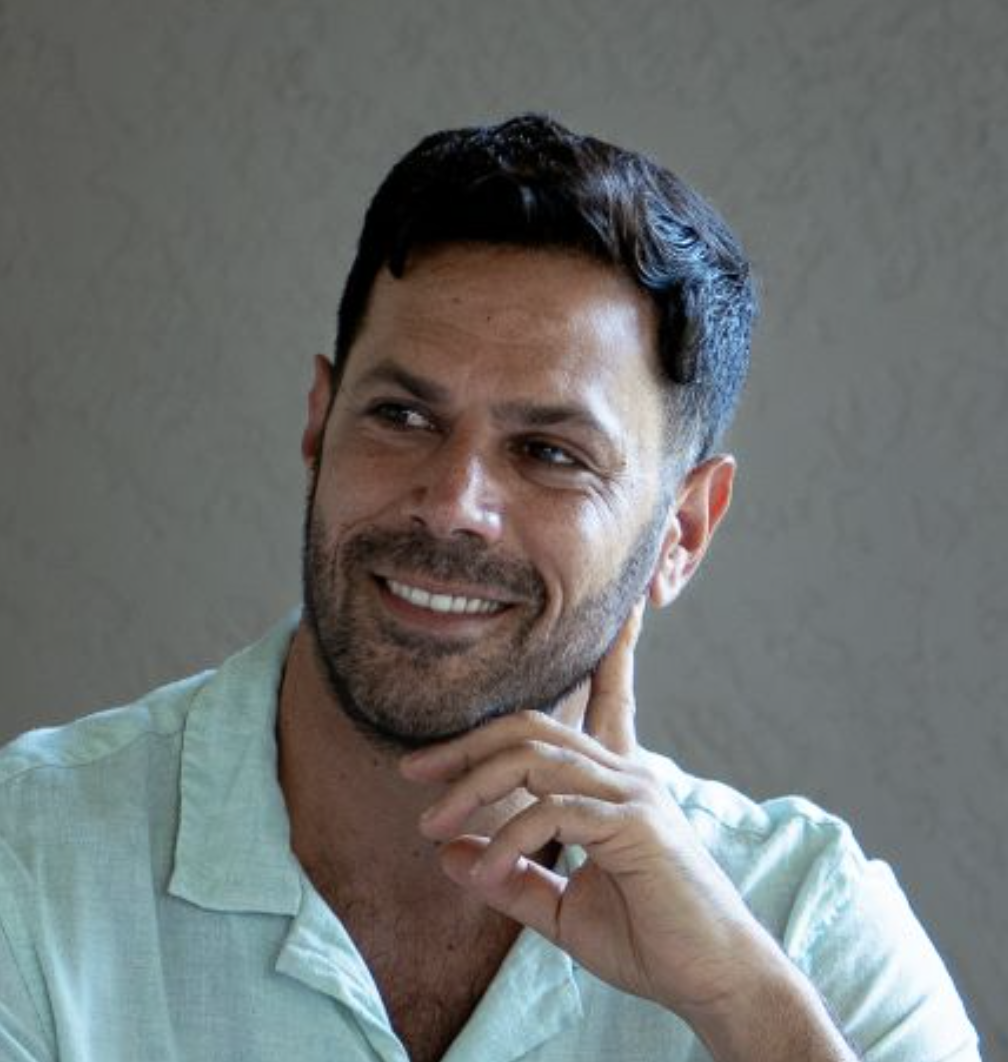
Step 1 · Internal integration first
30 seconds of silence before anything
"Take a moment. Close your eyes. Let everything from the last [time period] settle into your being. Don't analyze — let it land."
Step 2 · Turn to a partner
Rotate partners if possible — not always the same person
"Find a partner — ideally someone you haven't shared with yet. One minute each. The one with the bigger smile starts."
The "bigger smile" instruction is humor — it lightens the field before vulnerable sharing. Always name the timing clearly.
Step 3 · Prompt the share
Give one clear question — not three
"Share how you feel right now — physically, emotionally. What's alive for you? What has changed since you arrived?"
One question is enough. Multiple questions create mental processing. The goal is felt share, not analytical report.
Step 4 · Call time and switch
Time it. Be precise. Precision = safety.
"[After 60 sec] Thank you. Switch — second person, your minute starts now."
Step 5 · Optional group harvest
Invite 2–3 voices — not all of them
"Anyone want to share one word or one sentence with the whole group — what you're taking from this?"
One word shares are powerful — they force essence. Don't require them. Invite. The field knows who needs to speak.
Tools · Personal Practice

Vibrational Anchors

A vibrational anchor is a portal to a high-frequency moment — a real memory your body already knows. When you return to it with attention, the state comes back. Use it to shift your frequency before a session or whenever you need to remember who you are.

Data
AI Support
Ask AI Kobi
Get personalised support on anything from the method — a concept, a situation in the field, or a practice you want to go deeper on.
Kobi
Hey! I'm AI Kobi. What do you want to explore?
Session Tools
Find Your Music
Filter tracks by moment, emotion, and sonic quality — then save your selection as a Spotify playlist.
Requires Premium · plays tracks in this page
Loading…
Loading songs…
0 songs selected
Spotify · PKCE Auth
Name your playlist